Mamdani's Wake-Up Call
Zohran Mamdani had a huge night, and now Democrats are beginning to go through a process of rebranding that Republicans went through with Trump 10 years ago.

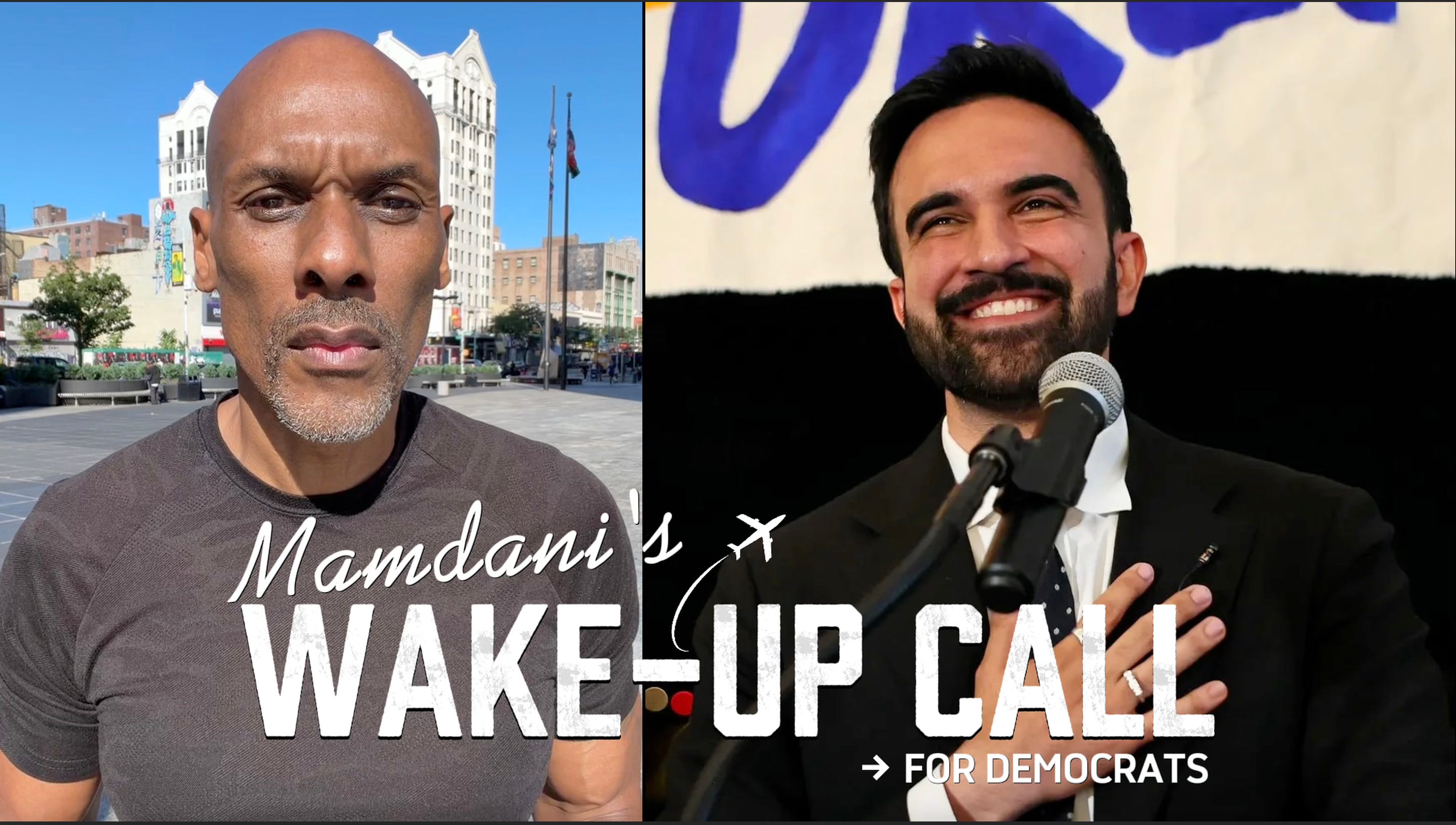
The New York Democratic primary was a huge victory for Mayor Zohran Mamdani. His candidates — Darializa Avila Chevalier, Brad Lander, and Claire Valdez — swept all three congressional races and took down two incumbent members of Congress. That never happens. That’s historic.
But the drama that’s unfolding is way bigger than New York. It’s about a change that’s happening in the Democratic Party and all throughout the country that can no longer be denied. The Democratic base is sick and tired of Democratic candidates who won’t fight like hell for their values. That’s why Mamdani won in New York City and why Janeese Lewis George won in Washington, DC.
You see, Democrats are going through the same process of rebranding that Republicans went through ten years ago with Trump. Back then, Republicans were angry after eight years of Obama, and they desperately wanted a new party that spoke to their rage at that Black guy. They were tired of the Bob Doles, John McCains, and Mitt Romneys, and they wanted somebody like Trump who channeled their prejudices.
When Trump came down that golden escalator in 2015, Republican leaders claimed that he did not represent the values of the party, but we all knew he did. The GOP had been trending racist since the Southern Strategy of the late 1960s. Trump just dragged them out of the closet.
That’s what’s happening in reverse with the Democratic Party. The Democratic establishment says the leftists and democratic socialists don’t represent the party, and that may be true for now, but the people who used to be the base of the party don’t care about labels, especially the young voters being priced out of the American dream. They care about jobs, health care, schools, housing, and affordability. And they care about justice and values. Call it whatever derogatory name you want, but the base wants results. And they want to win.
Just like Republicans got tired of hiding their racism, some Democrats got tired of hiding their progressivism. Black people got tired of compromising on civil rights and economic justice. Leftists got tired of compromising on income inequality and Gaza. And ordinary voters got tired of compromising on the basic right to health care.
By a two to one margin, Democratic voters last year said they wanted their leaders to fight, not compromise. And this is happening at the same time that half of all younger voters now identify as independent. And 62 percent of Americans say the country needs a third party.
It’s also a lesson about voting. Here in Harlem, Espaillat will end up with roughly 32,000 votes, about the same number he got in his last primary. But in a district with 700,000 people, that’s only 5 percent of the residents determining its future.
True, all these candidates are flawed and none will be perfect. And true, what happens in New York doesn’t necessarily translate to Oklahoma or Wyoming, but New York may be the canary in the coal mine. Democrats can’t keep putting up safe candidates and expect voter obedience. And the two parties can’t keep holding a monopoly on American politics anymore. Those days are numbered.
The lesson for Republicans with Trump in 2016 is the lesson for Democrats with Mamdani in 2026. If the party won’t give the base what they want, the base will find the people who will.
You are absolutely correct! If this is the Democratic version of the "Tea Party" movement, the Republican version has shown us the trajectory of that outcome.
Progressivism is the way forward for the Democratic Party. I’ve been saying it for years. The party establishment has been obediently following the direction of its corporate masters for too long. They can’t continue to shun the progressive voices. With party favorability at an all-time low, fascist authoritarianism controlling the country currently, and both parties doing corporate bidding instead of serving constituents, we are finally at the inflection point.